

How I Work with AI
Sometime in June I noticed an uncomfortable thing: I was using AI every day, and almost none of it accumulated. Every session started from zero. The resume advice I got on Monday contradicted the advice I got on Thursday, because neither session knew the other existed. I was learning to code, hunting a job, keeping notes, writing this blog, building projects — and every one of those was its own pile of chats, files, and half-automations.
So the real question wasn’t “which AI tool should I use?” It was: I have this many kinds of work — how do I manage them? This post is the answer I’ve built so far: three layers, and one example of how they combine when a real demand shows up. The full map — every workflow, role, and asset, kept current — lives at /atlas; this post is the guided tour.
The three layers
Data — what everything reads and writes
The bottom layer is just my facts, kept where a session can find them:
- A Logseq vault — my PKMS. Daily journals are the capture point; topic pages hold what I’ve learned. Every loop above writes into it; the vault itself is a sink.
- My projects — everything I’ve built, registered in one place with its stack, health, and what’s reusable from it.
- My work history — reviewed projects distilled into case studies,
then into a single facts file (
master.md) that anything career-facing must draw from. - My blog — this site: what I say in public.
- Myself — one interviewed master profile, distilled into a snippet every AI session loads, so no session starts by asking who I am.
Operation — who does the work
The middle layer is where work actually happens: two project repos, three roles, and one standing interview.
- forge manages the projects: register, review, mine each one for reusable parts, scaffold the next one from those parts.
- agent-kit manages the reuse: the prompt library, the skills, the snippets — anything generic enough to serve every other repo lives here, deployed via thin loaders, never pasted copies.
- The Editor (a role) owns this blog: voice, the draft pipeline, one language per page, a native-English pass on everything.
- The Librarian (a role) keeps the vault coherent: page naming, journal format, the capture pipeline — conventions, not content.
- The Brand Coach (a role, the newest) owns how I come across in public: positioning, platform strategy, an outside-in audit of my surfaces. Designed and inventoried, not yet run.
- The “About me” project (in Claude Cowork) maintains the master profile by interviewing me, then distills the versions everything else consumes.
A role, here, is not code. It’s a markdown doctrine file that a session reads and then acts as. Commands are checklists — the same steps every time; roles are where judgment concentrates.
Decision — who decides
At the top sits one more role: the Chief of Staff. It owns the inventory — one YAML file, one row per workflow: who owns it, where its entry points live, when it was last reviewed. The rule that makes the whole system honest is blunt: if it isn’t inventoried, it doesn’t exist. A small Python script checks the boring facts (do the entry points still exist, is any row stale), and the Chief of Staff makes the call the script can’t: keep, merge, automate, or retire. It audits the other three roles — and its own row.
This is the layer that catches me lying to myself. A glossary pipeline I’d built for interview prep looked like infrastructure for months; the audit found its staging file empty — zero syncs, ever — and retired it. The rule taken from the corpse: a workflow doesn’t get to claim “running” because its files exist; it has to show usage evidence.
Composing the layers: job hunting
The layers earn their keep when a special demand shows up, because most of what the demand needs already exists — I reuse it and add only the missing part.
Job hunting is the live example. It reuses the data layer: the
“About me” profile supplies who I am, and forge’s reviewed projects
supply the evidence, already distilled into master.md. What it
adds is only the pipeline no other loop had: scout job listings,
match them against a rubric, tailor a dated resume (every claim must
trace back to master.md — which is what ended the Monday-vs-Thursday
contradiction), and mock-interview me against the exact JD before any
human gets to.
That’s the pattern for any new demand: check the inventory, reuse what exists, build only the delta, and give the new part its own row.
The rest of the map
The first draft of this post had a third chapter: the full catalog — every workflow, role, and asset, one line each. I cut it. While the draft sat waiting for its refine pass, the catalog became a page of its own: the System Atlas, which the Chief of Staff regenerates from the inventory whenever the system changes. A catalog frozen inside a blog post starts drifting the day it ships; the atlas can’t drift, because it’s rebuilt from the same rows it audits.
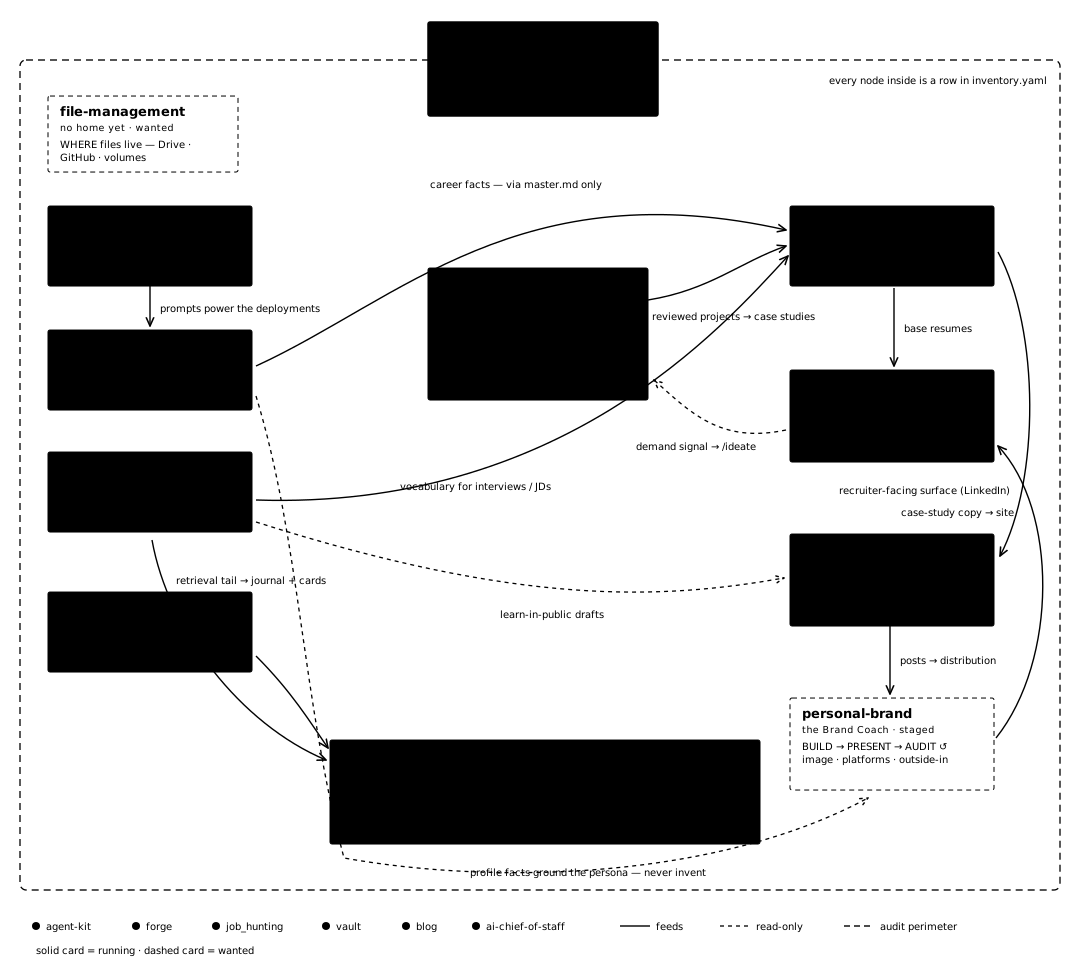
The map as it stood when this post shipped. For the current version, see the live atlas — rebuilt from the inventory whenever the system changes.
As of July 7, 2026 — the day this post shipped — the map held twelve workflows and four judgment-roles — three running the operation, one auditing it. The pieces that deserve depth — how I study, how the job pipeline runs, how I decide which tier of AI tool gets a task — will get posts of their own. This one is just the tour.
One rule over everything
Output is the only thing that matters, and only output I generated. The research is clear enough that I treat it as settled — delegating the writing or the code produces near-zero learning. So AI critiques, checks, drills me with questions, and drafts throwaway scaffolding; the code I’m trying to learn, I type, and the understanding has to survive an explain-back before it counts.
Full disclosure, because this post is the first to run my publishing pipeline end to end: its first draft was AI-written, at my request, against my own Editor’s doctrine — then cut, fact-checked, and refined through that same pipeline before it shipped. That tension, wanting the leverage without letting it hollow out the work, is the entire reason the system exists. The inventory doesn’t resolve the tension. It just makes sure I can see it.